
The short answer
Your garage door is almost certainly the weakest structural point on your house. A standard residential door is a large, lightweight panel held in place by tracks, rollers, and hardware that were engineered for everyday opening and closing, not for sustained wind pressure or flying debris. When a nor'easter pushes sustained wind and gusts against your home, the garage door faces more surface area, per square foot, than any wall or window. If it fails, wind can enter the garage, pressurize the space from the inside, and put stress on the roof and walls that they were never designed to handle. The fix isn't complicated, but it does mean doing a few specific things before the season gets going, not after the first big storm warning.
Why this matters more in this part of Westchester
Pleasantville and the surrounding towns get real nor'easters, not just rain events. These storms bring sustained wind, heavy gusts, and often arrive with little warning once the forecast firms up. A lot of the housing stock here is older, which means a lot of original garage doors that were installed decades ago under building codes, or no wind-specific code at all, that didn't account for the wind pressures we now know these storms can produce. An original door might look fine and operate smoothly on a calm day and still be structurally underprepared for a 60 mph gust. Add in the freeze-thaw cycles that are common through a Westchester winter, and hardware that's already a little worn from age can degrade faster right when you need it most.
What actually fails first
In high wind, a few specific failure points show up again and again:
- Track separation. Wind pressure can bow the door panels enough to pop rollers out of the track, especially on older steel doors with thinner gauge panels.
- Panel buckling. Lightweight or older doors without internal reinforcement struts can bow inward or outward under sustained pressure, even if they don't fully fail.
- Weak attachment points. The hinges, end brackets, and track fasteners are only as strong as the screws holding them to the frame. On an older door, these are often the original fasteners, and wood jambs that have gone through years of freeze-thaw can have loosened screw holes.
- Opener strain. A door that's struggling against wind pressure puts extra load on the opener's drive system and can trip the safety reversal or burn out the motor trying to compensate.
Concrete steps to take before storm season
1. Inspect and tighten hardware
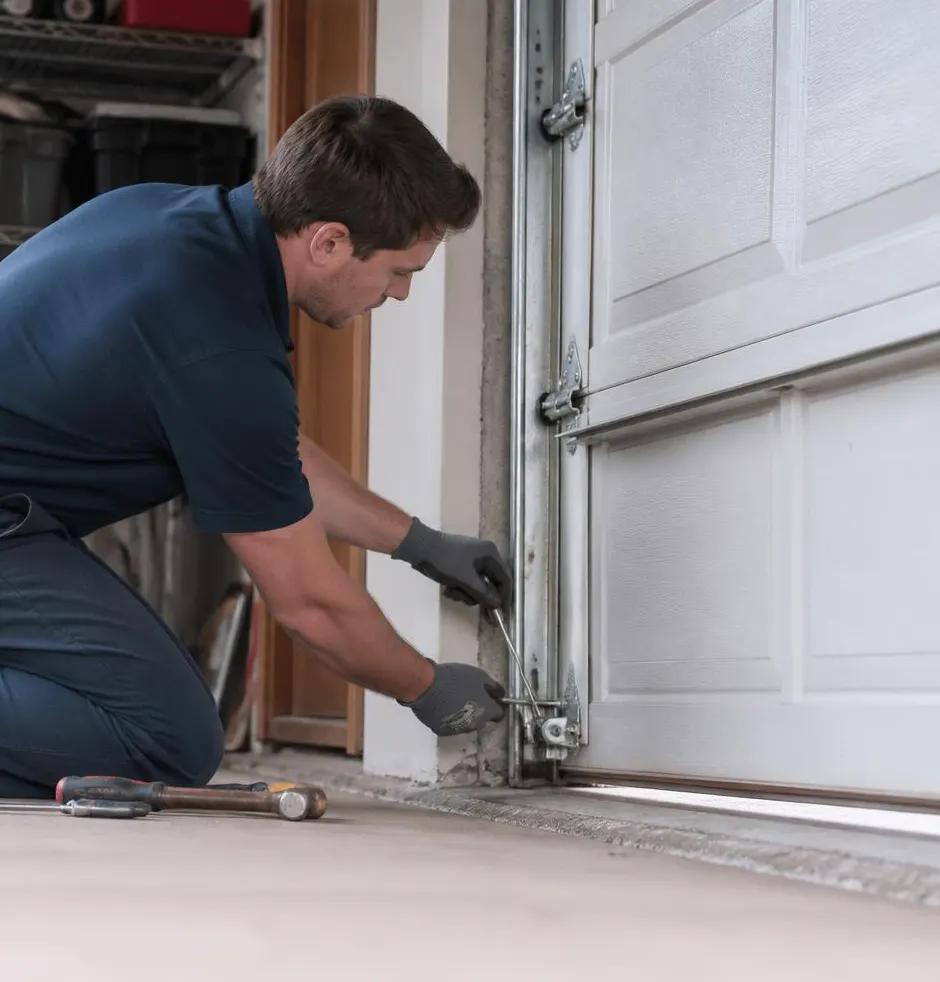
Walk the full door: hinges, track brackets, roller shafts, and the fasteners connecting the track to the wall framing. Tighten anything loose, and replace any screws that spin freely in their holes rather than catching. This is a 20-minute job that addresses one of the most common failure points.
2. Check for a reinforcement strut, or add one
Many older doors were built without horizontal reinforcement struts across the panels. A retrofit strut kit, horizontal bars bolted across the back of the door, meaningfully increases the door's resistance to bowing under wind load. This is a relatively low-cost upgrade compared to full replacement and it's specific to the structural weak point, not a cosmetic fix.
3. Inspect rollers and track alignment
Rollers that are worn, cracked, or sitting slightly off-track have much less margin before they pop loose under pressure. If you see visible wear, chipping, or a door that doesn't glide smoothly, that's worth resolving before wind season, not during it.
4. Test the auto-reverse and opener function
An opener under wind-related strain needs its safety systems working correctly. Test that the door reverses properly when it meets resistance, and listen for grinding or straining sounds during normal operation, which often signal the motor is already compensating for something mechanical.
5. Weatherstrip and seal gaps
Beyond wind resistance, sealing the bottom and side gaps reduces how much wind-driven rain and snow gets pushed into the garage during a nor'easter, which matters for anything stored near the door and for preventing ice buildup on the garage floor near the threshold.
6. Know your door's wind rating, if it has one
Newer doors are often rated for specific wind pressures, typically listed in the manufacturer's specs. If you've had a door installed in the last several years, check whether it carries a wind-load rating. If you have an original door from an older build, it likely predates this kind of rating altogether, which is useful to know when deciding whether reinforcement or replacement makes more sense.
The trade-off: reinforce or replace
Reinforcement struts, hardware upgrades, and weatherstripping are the right call for a door that's structurally sound but under-braced. If your door already shows panel warping, rust-through, or persistent track misalignment, especially common on original doors that have been through many Westchester freeze-thaw cycles, reinforcing an already-compromised door only goes so far. At that point, a wind-rated replacement is the more durable fix, even though it costs more upfront. National pricing for garage door replacement typically runs from the low thousands into the higher end depending on size, material, and insulation, so it's worth getting a direct look before assuming which category your door falls into.
When to call Pleasantville Garage Door
If your door is showing any of these warning signs, a track that's slightly bent, rollers that look worn, a panel that doesn't sit flush, or an opener that's straining, it's worth having it looked at before the first major storm rather than after. Pleasantville Garage Door can handle a full pre-storm inspection and garage door maintenance visit, tightening hardware, checking alignment, and flagging anything that needs attention. If reinforcement or a wind-rated garage door installation makes more sense for your specific door, we'll walk you through the real trade-offs rather than pushing a bigger job than you need.
If you're in Pleasantville, Chappaqua, Mount Kisco, Briarcliff Manor, Ossining, Hawthorne, Thornwood, or Armonk and want your garage door checked before the next nor'easter rolls through, call Pleasantville Garage Door today.